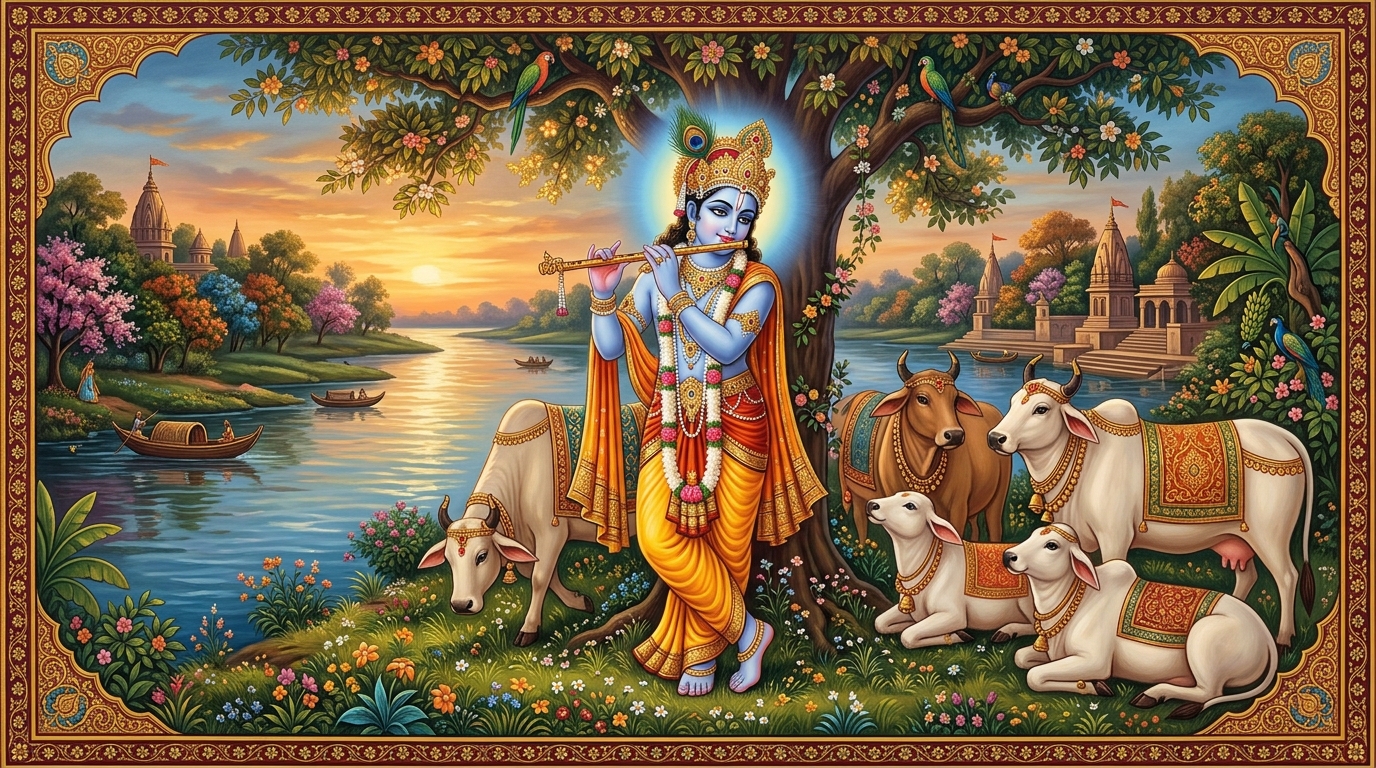
Shrimad Bhagavatam: The Living Form of Lord Krishna in Kaliyuga
In the Uttara Khanda of the Padma Purana, Maharishi Veda Vyasa reveals that when Bhagwan Sri Krishna prepared to conclude His earthly pastimes and return to His supreme abode of Vaikuntha, his beloved devotee Uddhava was overcome with grief. Uddhava pleaded: 'O Lord, when You depart, how will wandering souls find salvation amid the spiritual darkness and confusion of Kaliyuga?'
At that moment, Yogeshwar Krishna deposited His complete divine luster, transcendental wisdom, and boundless grace into the twelve cantos of the Shrimad Bhagavatam. Hence, Sanatan tradition holds that the Bhagavatam is not an ordinary book of stories, but the direct literary incarnation (Vangmaya Vigraha) of the Supreme Lord Himself. Simply beholding its verses with devotion dissolves sins accumulated across multiple lifetimes.
Why Liberation in Seven Days (Saptah Yagya)?
When King Parikshit was cursed by the young sage Shringi to perish within seven days by the venomous bite of the serpent king Takshaka, he immediately renounced his kingdom, riches, and royal comforts. Sitting on the sacred banks of the Ganges, he sought only the eternal path to conquer the dread of death.
Great sages converged, but only the youthful avadhuta Sage Shukadeva provided the sovereign solution. He elucidated that the human lifespan is inherently bounded by a cycle of seven days—from Monday to Sunday. Every soul is born on one of these seven days, and physical death must inevitably arrive on one of them. Therefore, whoever dedicates seven continuous days to deep contemplation of the Divine Transcendence steps entirely beyond the clutches of time and enters eternal fearless freedom.
The Deliverance of Dhundhukari: Even Wandering Spirits Attain Peace
The Bhagavatam Mahatmya narrates the striking story of Gokarna and his torment-ridden brother Dhundhukari. Having lived a life filled with vices and severe sins, Dhundhukari wandered after death as a tormented pret (ghost). When Gokarna organized a sacred Shrimad Bhagwat Saptah for his brother's deliverance, the spirit of Dhundhukari sat invisibly within a hollow seven-knotted bamboo to listen to each verse.
With each passing day of attentive listening, one knot of the bamboo burst open. By the seventh day, the spirit was cleansed of all sins, assumed a radiant divine form adorned with yellow silk, and was received directly into Vaikuntha. This history exemplifies that earnest listening to the Bhagavatam redeems not only the listener but bestows divine blessings on ancestral lineages for generations.
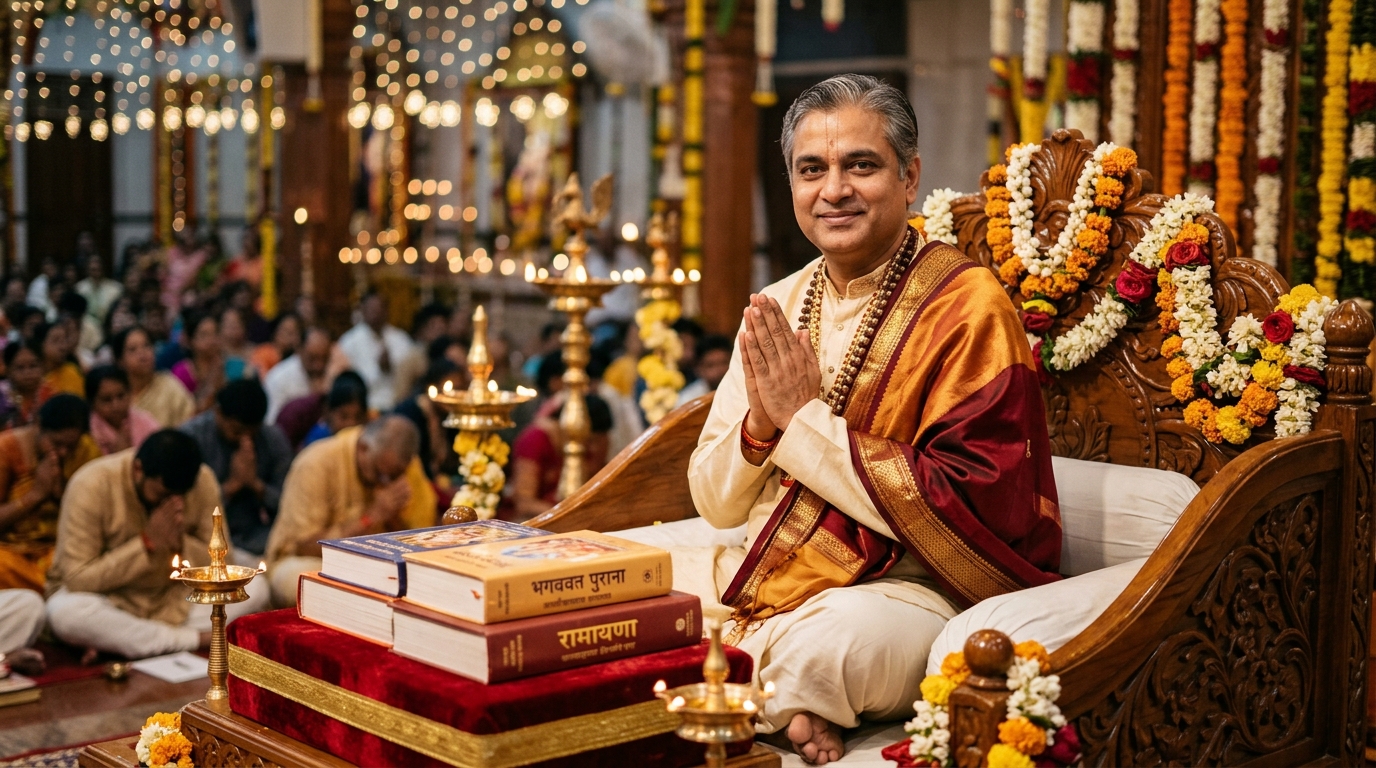
Author: Acharya Suneel Pandey
Renowned Katha Vakta and Vedic scholar. For over two decades, Acharya Ji has inspired millions through Shrimad Bhagwat and Ramayan Katha discourses across India and internationally. Phone: +91 88796 66778.