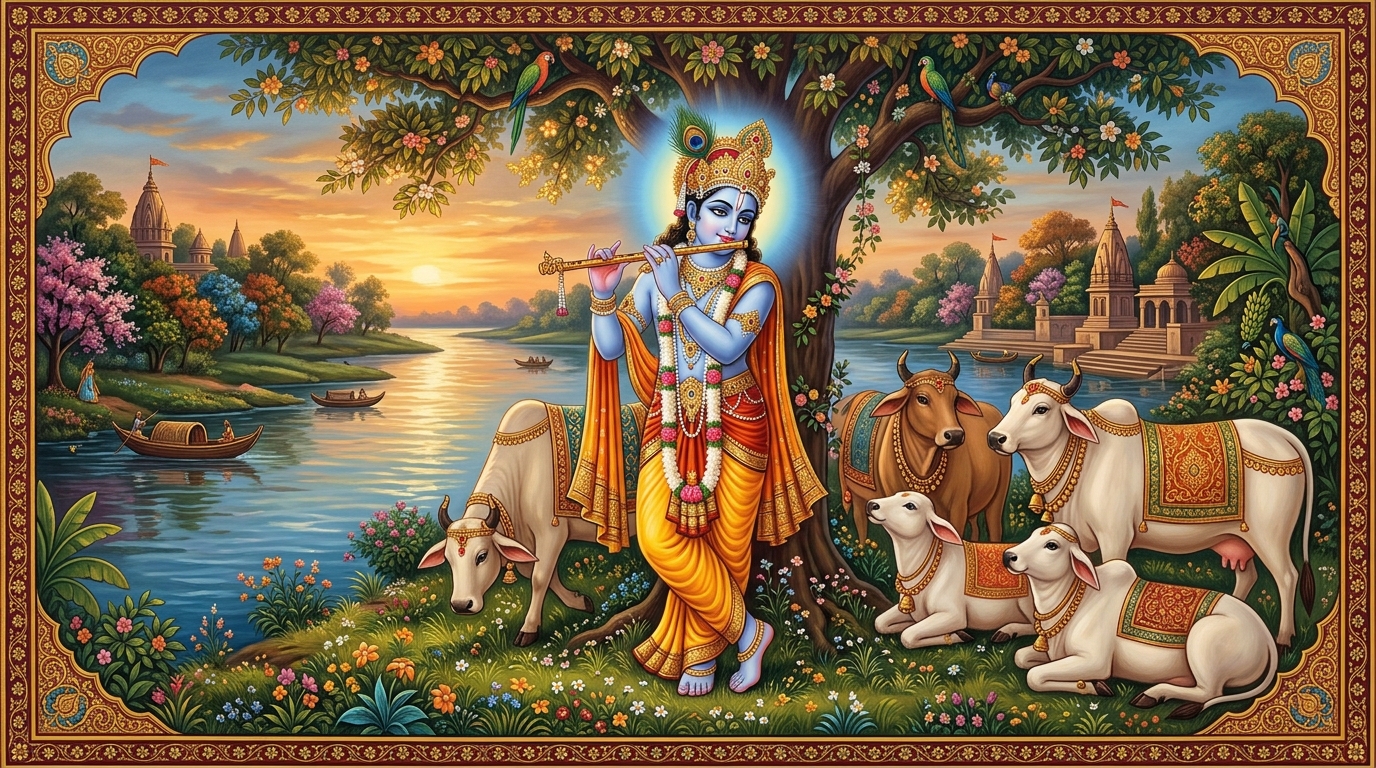
The Spiritual Persona of Vrinda Devi
In the Padma Purana and Brahma Vaivarta Purana, Tulsi is recognized as Vrinda Devi, the eternal consort and dearest devotee of Bhagwan Sri Krishna. Without a consecrated leaf of Tulsi (Tulsi Dal), Lord Vishnu does not accept any food offering (Naivedya). Her presence in a home transforms the premises into a sacred sanctuary where negative spirits cannot enter.
Ayurvedic and Immunological Wonders
Modern botanical and pharmacological research consistently verifies the insights of ancient sages. Tulsi (Ocimum sanctum) possesses potent adaptogenic, anti-bacterial, anti-viral, and anti-fungal properties. Daily consumption of 2–3 fresh leaves boosts cellular immunity, lowers cortisol (stress hormone), cleanses the respiratory tract, and maintains balanced blood glucose levels.
Guidelines for Offering Water & Deepam
Vedic tradition enjoins offering pure water to the Tulsi plant every morning after bathing, circumambulating three times while chanting her stotra, and lighting an earthen sesame-oil or ghee lamp at dusk. Tulsi leaves should never be plucked on Sundays, Ekadashi, or after sunset.
Author: Acharya Suneel Pandey
Spreading Sanatan ecological consciousness and scriptural wisdom. Contact: +91 88796 66778.