Meaning of Karma Kanda in Vedic Tradition
In Sanatan Dharma, the Vedas are traditionally understood in three broad divisions: Karma Kanda (the ritualistic actions, prayers, and sacrifices), Upasana Kanda (worship, meditation, and inner devotion), and Jnana Kanda (philosophical inquiry into the nature of Brahman, as expounded in the Upanishads). Of these, Karma Kanda forms the practical foundation of spiritual life for householders, detailing how humans interact with divine forces through consecrated prayers, yajnas, and samskaras.
A Karmakandi Brahmin is a learned Vedic practitioner who dedicates his life to mastering this vast corpus of Vedic mantras, Kalpa Sutras, Grihya Sutras, and Shrauta rituals to guide society in living in harmony with cosmic law (Rita and Dharma).
Who is a Karmakandi Brahmin? (कर्मकांडी ब्राह्मण किसे कहते हैं?)
A Karmakandi Brahmin is not merely someone born into a priestly lineage; by definition of the Shastras, he is one who possesses deep practical knowledge of Vedic rituals and lives according to Vedic purity. His responsibilities include:
- Mantra Siddhi & Pure Pronunciation: Chanting Vedic suktas with accurate swara (Udatta, Anudatta, and Svarita), ensuring that sound vibrations align with their intended spiritual effects.
- Purity of Life (Achar-Vichar): Observing daily Sandhyavandanam, Gayatri japa, Snana, and sattvic diet to maintain spiritual receptivity.
- Expertise in Shodasha Samskaras: Guiding human life through the 16 sacred rites of passage—from Garbhadhana and Pumsavana to Namakarana, Vivaha, and Antyeshti.
- Conducting Yagyas and Pujas: Serving as the Hotri, Adhvaryu, or Purohit during household and temple rituals.
The 6 Cardinal Duties (Shatkarma) of a Brahmin
Classical scriptures define the life of a true Brahmin through six eternal duties known as the Shatkarma:
- Adhyayana (अध्ययन): Constant self-study of the Vedas, Upanishads, Vedangas, and Dharmashastras throughout life.
- Adhyapana (अध्यापन): Imparting knowledge selflessly to disciples and younger generations without commercial greed.
- Yajana (यजन): Performing daily personal yajnas, agnihotra, and devatas' puja for spiritual upliftment.
- Yaajana (याजन): Conducting rituals, pujas, and yagyas on behalf of devotees (Yajmans) to invoke divine grace for their homes and families.
- Daana (दान): Donating to the needy, supporting cows (Gau Seva), and nourishing learned scholars.
- Pratigraha (प्रतिग्रह): Accepting only righteous and voluntary offerings (Dakshina) from virtuous persons for sustenance, never hoarding wealth.
Why Is a Karmakandi Brahmin Essential for Your Household Pujas?
Many modern households wonder if they can simply play an audio recording or recite mantras casually. In Vedic philosophy, rituals operate as conscious cosmic sciences:
- Precise Sankalpa: A Karmakandi Pandit invokes the specific time, place (Desha-Kala), Gotra, and purpose of the Yajman, anchoring the ritual in the cosmic timeline.
- Avahana & Prana-Pratishtha: Through Mudras, Nyasa, and consecrated water, the divine presence is invoked upon the Kalash and Vigraha.
- Flawless Vidhi: Whether conducting Shri Satyanarayan Katha, a Griha Pravesh Vastu Puja, or an intricate Kaal Sarp Dosh Shanti & Nivaran, an experienced Karmakandi ensures no essential step is missed.
- Spiritual Vibration: Chanting done with proper devotion and breath control clears negativity from the home, infusing peace, health, and auspiciousness.
How to Select a Genuine Karmakandi Pandit Ji
When inviting a priest for ceremonies in your home, seek an Acharya who speaks with patience, explains the philosophical significance of the mantras, arrives punctually, and provides a transparent samagri list well in advance. For household katha discourses and Vedic anushthans in Mumbai, Thane, Navi Mumbai, and across India, explore our services with Acharya Suneel Pandey at Pandit for Katha and explore our Satyanarayan Katha offerings.
Frequently Asked Questions
What is meant by a Karmakandi Brahmin?
A Karmakandi Brahmin is a Vedic scholar and priest who has mastered the ritualistic portion (Karma Kanda) of the Vedas, Shastras, and Grihya Sutras. They are trained in performing authentic pujas, yajnas, sanskaras, and anushthans according to proper Vedic mantras and swaras.
What are the six duties (Shatkarma) of a Brahmin?
According to the Shastras, the six classical duties (Shatkarma) are Adhyayana (studying the scriptures), Adhyapana (teaching), Yajana (performing sacrifices for oneself), Yaajana (conducting rituals for others/Yajmans), Daana (giving charity), and Pratigraha (accepting righteous offerings).
Why is a qualified Karmakandi Pandit essential for pujas and havan?
Vedic rituals rely on correct Sanskrit mantra pronunciation (Shuddha Uccharan), exact planetary timings (Muhurat), and step-by-step offerings. A learned Karmakandi Brahmin ensures that mantras are chanted with proper vibration and all Shodashopachara rituals are respected, bestowing positive spiritual results on the Yajman.
What rituals do Karmakandi Brahmins perform?
They conduct all major 16 Vedic Samskaras (including Namkaran, Vivah, Antyeshti), home pujas like Satyanarayan Katha and Griha Pravesh, planetary remedies (Navgrah Shanti, Kaal Sarp Dosh), Rudrabhishek, and grand Yagyas.
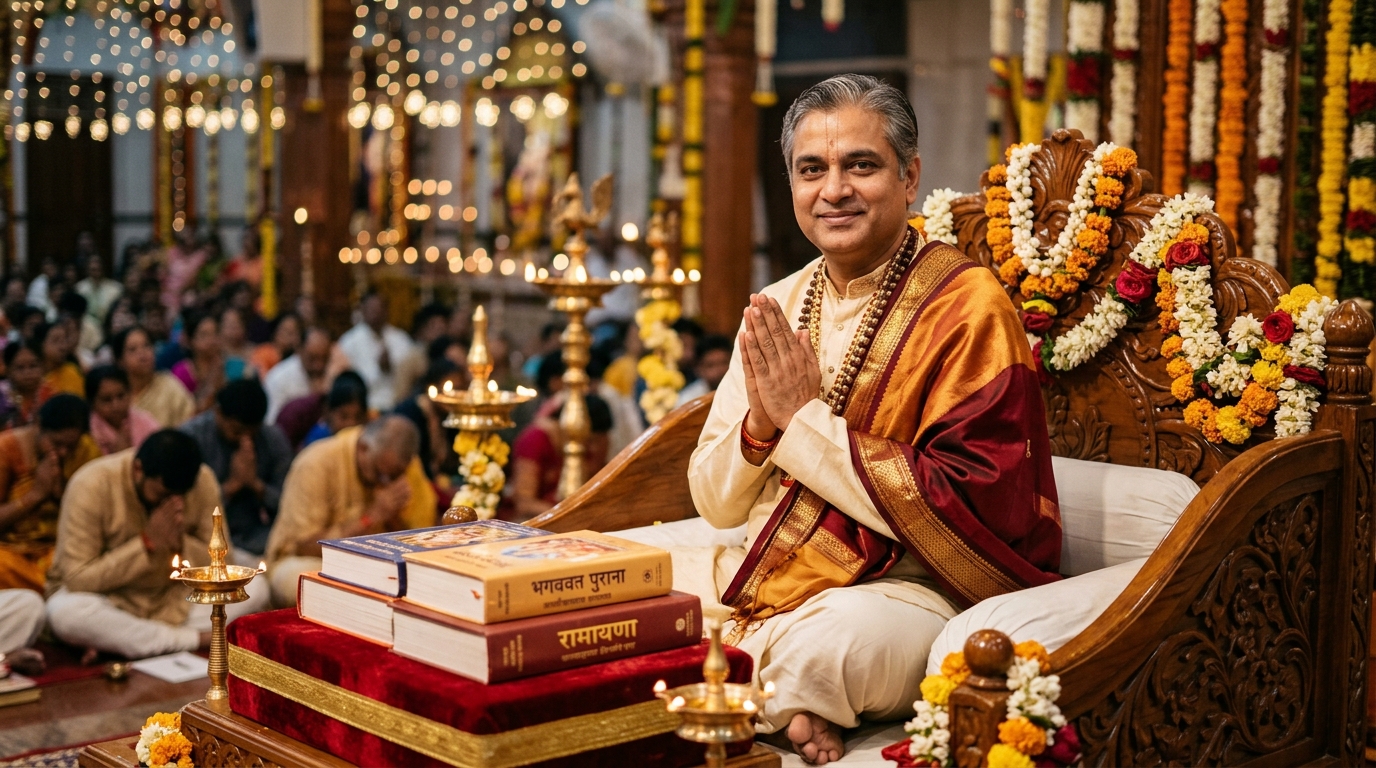
Author: Acharya Suneel Pandey
+91 88796 66778 | info@kathabhakti.in